Lectures 2A and 2B define Effective Leadership, review what you should study in addition to this course material, describe what benefits the diligent student can expect and tell a story that validates the claims for the results of the recommended study.
Effective Leadership
Effective Leadership is the behavior of an organization’s leader that enables the organization to function to its fullest capability. Most managers are not effective leaders. Their behavior actually inhibits the effectiveness of their organization. It requires training; self-study and practice to become an effective leader. In some organizations it also requires great courage to behave in ways outside the parent organization’s primary culture.
Management and leadership can be simply defined as management is doing things right and leadership is doing the right things. This course is about both because to be effective you must do both the right things and do things right. To achieve the benefits promised in the introduction the student must be both an effective manager and leader. In most cases the benefits are achieved only via change in the manager’s behavior and the organization’s work methods. Change doesn’t happen without leadership. Perhaps a metaphor best explains effective leadership. Think of a well-trained dog working or playing with its master. Both know what is expected of them. The dog has certain freedoms and certain limits. The dog knows the freedoms and limits and is able to perform effectively with little guidance from the master. The master knows and respects the dog’s abilities so that he or she knows what commands are necessary and when they are needed. This enables the dog and master to enjoy their activities together. It takes training and persistence to achieve this relationship but it is rewarding for both the dog and master. I don’t need to describe an ineffective dog trainer/master as you have likely seen the results and they aren’t pretty. Neither the master nor the dog has a good time.
Effective leaders are like the effective trainer/master of a well-trained dog. They can empower their workers because the workers have been effectively trained and motivated. The workers willingly take responsibility for their jobs because they have control of their jobs, within agreed upon limits. Properly trained, motivated and empowered workers are more productive and happier than workers that are neither properly trained nor empowered and therefore must be micromanaged by their supervisors. Leaders of properly trained and empowered workers are not swamped with daily crises and have the time to provide the leadership needed to achieve the organization’s strategic objectives.
First Exercise
Spend a few minutes thinking about your working environment and the culture of your organization.
Now: Without looking ahead describe how you characterize the current working environment-
First: In the organization you manage.
And then: In the organization you work in or report to.
Did your description include words like?
• High Pressure
• Fast Paced
• Cost Cutting
• Short Term Focus
• More From Fewer Workers
• Crisis Every Day
• Everyone working several tasks at once
If not, you are in a very rare and exceptional organization. If so, then you are in a typical 21st century work environment. You can complain about it at home but to be successful you have to learn how to thrive in such an environment. I believe this course will help. You need to know how to achieve effective long term results in a short term environment. That is the subject of this course.
Now let’s address what justifies my claim that the principles and methods presented in this course will enable your organization to achieve a 20 to 30% improvement in effectiveness. Let’s look at two conditions in most organizations. First, many gurus of management and of quality improvement methods assert from their experience that the extra cost due to poor quality in most organizations ranges from 20 to 40 percent of the total costs of the organization. Second, “Many managers would agree that the effectiveness of their organizations would be at least doubled if they could discover how to tap the unrealized potential present in their human resources” (See p 4 of The Human Side of Enterprise by Douglas McGregor)
Therefore most organizations have the potential for a 20 to 40 percent improvement if they eliminate the cost of poor quality. There is the potential for a 10 to 20 percent improvement if only half the cost of poor quality is eliminated. The methods for improving quality are well known and are being practiced in some organizations. These methods go by various names such as Total Quality Management, Continuous Process Improvement, Six Sigma and other such names.
How to tap the unrealized potential present in workers is less well known but there are proven methods. I am not sure if taping unrealized potential at least doubles the effectiveness as McGregor says many managers claim but I know it makes an improvement equal to or greater than improving poor quality. This course shows how to both reduce the costs of poor quality and to tap the unrealized potential of workers. I have achieved these goals in organizations I have managed and watched others achieve them in organizations for which I have consulted. Properly combined these two methods easily result in a 20 to 30 percent improvement in organizational effectiveness.
Now the bad news. In addition to this course of study it takes follow-up to achieve the desired results, including:
• Additional 40-60 hours of training for yourself and for each member of your organization (less if your organization already has an effective quality improvement program in place.)
• 50-100 hours of self-study (self-study can be cut in half by doing assigned homework)
• Practicing what you have learned with the organization you manage for two to five years
Not easy, but if it was there would be many effective leaders and most organizations would be achieving their potential.
If you find that the pace of blog posts isn’t compatible with the pace you would like to maintain in studying this material you can buy the book “The Manager’s Guide for Effective Leadership” at:
http://www.amazon.com/Managers-Guide-Effective-Leadership-Organizations/dp/1449000673/ref=sr_1_2?ie=UTF8&qid=1346946310&sr=8-2&keywords=Joe+Jenney
or hard copy or for nook at:
http://www.barnesandnoble.com/s/Joe-Jenney?keyword=Joe+Jenney&store=book
or hard copy or E-book at:
http://bookstore.authorhouse.com/Products/SKU-000269270/The-Managers-Guide-for-Effective-Leadership.aspx
Tuesday, September 11, 2012


Thursday, September 6, 2012
Part I Leadership for Motivating People
1 Introduction
This introduction describes how the course material is structured for individual study, suggests an approach to studying the material and lists definitions of key terms used in the course.
How does this course work?
The course material is presented in a series of lectures with exercises accompanying most lectures. The student is to study each lecture and complete the exercises at the end of the lecture or included within the body of the lecture. In many cases the exercises are specific to the student’s work so no answers are provided. The benefit is from the student thinking about how to apply the principles and methods discussed in the student’s organization. In other cases the exercises are more general and discussion of the results is included in the lecture materials.
The lectures are short, typically taking no more than 10 to 20 minutes of study per topic. It is expected that the student spend at least an equivalent amount of time on the accompanying exercises. The reason for keeping the lectures short is recognition that the students are fully loaded workers or managers and can spare only a brief time each day for self-study. In addition to the lectures and exercises the student must read supplemental materials. In some cases this is to fill in knowledge that is assumed to be known and other cases it is to expand on the lecture materials. Implementing the methods taught begins early in the course with the student developing and applying a personal action plan.
The personal action plan is developed by the student as the student progresses through the course. The typical sequence is to study a lecture and any necessary additional sources for the lecture, work the exercises for the lecture and then think through how the material should be applied to the student’s organization and management processes. From this analysis actions are defined and then practiced and refined until the actions are part of the student’s normal behavior and organizational changes are complete. Step by step direction is given for developing the personal action plan.
Course Outline and Structure
There is logic to the organization of the course material and it is helpful for students to know this structure before starting to study to better understand what is covered and plan their study. Students new to management are advised to work through the lectures in sequence. More experienced managers may want to skim introductory material and concentrate on topics that address known problems in their organization.
The three lectures following this introduction discuss some of the basics of selected management strategies and the functions that managers perform in their daily work. Lectures 5-16 address half of the job of effective leaders, motivating the people in their organization. Lectures 17-22 examine the management functions of staffing and communicating. Lectures 23-28 address portions of the control function that are common to all organizations, risk management and process improvement. Lecture 29 provides a proven methodology for planning change in an organization, which is the responsibility of the organization’s leader. The course ends with guidance on completing and implementing the student’s leadership action plan that is developed step by step during the course. Reviews of material covered are included periodically to facilitate learning.
I suggest that you plan your approach to this study before you start and stick to your plan. For example, select a time during the day when you can devote 20 to 40 minutes to the course work. It might be during your lunch break, the period between when you get home from work and you prepare or eat your evening meal, right after you eat or after your kids are in bed. If you make it a practice to set aside this time each day or three days per week then your family or associates are more likely to respect this time as your personal time. I suggest the lunch hour because you can study with several of your associates. This is more fun and makes the exercises more effective because you can discuss them together.
Do not let learning this material take so much time from your job that your basic work is compromised. It is probably reasonable to spend up to ten percent of your time on this course, e.g. about four hours per week, and ninety percent on your current work objectives. Over time this will enable you to continue to perform your work well and to constantly improve your management skills. Also do not try to learn this material in a quick read through. The material is meant for you to study and to reflect on how it applies to you and to your organization. Sometimes it is best to take a week or more following up on an exercise that reveals a problem in your organization or reading recommended supplemental material.
I do not recommend that managers and their subordinates be on the same study team, at least for the first part of the course, because it can inhibit frank discussions and may lead to unrealizable expectations. For example, your subordinates upon learning that your current behavior should be modified may expect you to instantly change and few of us are capable of instant behavior changes.
After the student has completed the course and is confident that the methods can be put into practice in the organization then is the time to involve subordinates in discussing and learning this material. If you are a manager of other managers then it is necessary that your subordinate managers understand, buy into and commit to implementing the methods taught in order for the organization to benefit. Learning the material and then teaching it to your staff is an effective way to truly understand these methods. There are situations where it is effective for the manager and subordinate managers to learn together. I leave it to the students to analyze their subordinate managers and their organizations’ cultures before making this decision but be careful or workers will think this is just another short-term fad or “quick fix” and not give it the sustained attention it requires.
There is no quick fix for poor leadership styles. It takes study, continued outside reading and practice to achieve the desired results. It is hard work but the rewards are great in terms of both self satisfaction and the more responsible positions this study enables the student to achieve. When you succeed you will find an unexpected benefit. Your job will be considerably easier. The day to day crises that plague most managers will begin to diminish and you will be able to focus most of your time on high payoff tasks rather than solving daily crises.
Definitions that are used in this course:
• Manager-The person responsible for leadership of a group of people. (team, section, department, or division,)
• Worker-A person belonging to group that reports to a manager (Almost all managers are also workers) • Student-The person reading this material, who can be either a worker or a manager
• Organization-The group of people led by a manager; it can be any number of people and may include many other managers
• Process- The individual and collective procedures by which workers execute their work. Every process has inputs, outputs, customers and suppliers.
• System-The inputs, outputs, process, management, environment, etc., that is everything but the workers. The system includes all of the processes that affect any worker or manager.
• Enterprise-The whole organization where workers and managers are employed.
If you find that the pace of blog posts isn’t compatible with the pace you would like to maintain in studying this material you can buy the book “The Manager’s Guide for Effective Leadership” at: http://www.amazon.com/Managers-Guide-Effective-Leadership-Organizations/dp/1449000673/ref=sr_1_2?ie=UTF8&qid=1346946310&sr=8-2&keywords=Joe+Jenney or hard copy or for nook at:http://www.barnesandnoble.com/s/Joe-Jenney?keyword=Joe+Jenney&store=book or hard copy or E-book at: http://bookstore.authorhouse.com/Products/SKU-000269270/The-Managers-Guide-for-Effective-Leadership.aspx
This introduction describes how the course material is structured for individual study, suggests an approach to studying the material and lists definitions of key terms used in the course.
How does this course work?
The course material is presented in a series of lectures with exercises accompanying most lectures. The student is to study each lecture and complete the exercises at the end of the lecture or included within the body of the lecture. In many cases the exercises are specific to the student’s work so no answers are provided. The benefit is from the student thinking about how to apply the principles and methods discussed in the student’s organization. In other cases the exercises are more general and discussion of the results is included in the lecture materials.
The lectures are short, typically taking no more than 10 to 20 minutes of study per topic. It is expected that the student spend at least an equivalent amount of time on the accompanying exercises. The reason for keeping the lectures short is recognition that the students are fully loaded workers or managers and can spare only a brief time each day for self-study. In addition to the lectures and exercises the student must read supplemental materials. In some cases this is to fill in knowledge that is assumed to be known and other cases it is to expand on the lecture materials. Implementing the methods taught begins early in the course with the student developing and applying a personal action plan.
The personal action plan is developed by the student as the student progresses through the course. The typical sequence is to study a lecture and any necessary additional sources for the lecture, work the exercises for the lecture and then think through how the material should be applied to the student’s organization and management processes. From this analysis actions are defined and then practiced and refined until the actions are part of the student’s normal behavior and organizational changes are complete. Step by step direction is given for developing the personal action plan.
Course Outline and Structure
There is logic to the organization of the course material and it is helpful for students to know this structure before starting to study to better understand what is covered and plan their study. Students new to management are advised to work through the lectures in sequence. More experienced managers may want to skim introductory material and concentrate on topics that address known problems in their organization.
The three lectures following this introduction discuss some of the basics of selected management strategies and the functions that managers perform in their daily work. Lectures 5-16 address half of the job of effective leaders, motivating the people in their organization. Lectures 17-22 examine the management functions of staffing and communicating. Lectures 23-28 address portions of the control function that are common to all organizations, risk management and process improvement. Lecture 29 provides a proven methodology for planning change in an organization, which is the responsibility of the organization’s leader. The course ends with guidance on completing and implementing the student’s leadership action plan that is developed step by step during the course. Reviews of material covered are included periodically to facilitate learning.
I suggest that you plan your approach to this study before you start and stick to your plan. For example, select a time during the day when you can devote 20 to 40 minutes to the course work. It might be during your lunch break, the period between when you get home from work and you prepare or eat your evening meal, right after you eat or after your kids are in bed. If you make it a practice to set aside this time each day or three days per week then your family or associates are more likely to respect this time as your personal time. I suggest the lunch hour because you can study with several of your associates. This is more fun and makes the exercises more effective because you can discuss them together.
Do not let learning this material take so much time from your job that your basic work is compromised. It is probably reasonable to spend up to ten percent of your time on this course, e.g. about four hours per week, and ninety percent on your current work objectives. Over time this will enable you to continue to perform your work well and to constantly improve your management skills. Also do not try to learn this material in a quick read through. The material is meant for you to study and to reflect on how it applies to you and to your organization. Sometimes it is best to take a week or more following up on an exercise that reveals a problem in your organization or reading recommended supplemental material.
I do not recommend that managers and their subordinates be on the same study team, at least for the first part of the course, because it can inhibit frank discussions and may lead to unrealizable expectations. For example, your subordinates upon learning that your current behavior should be modified may expect you to instantly change and few of us are capable of instant behavior changes.
After the student has completed the course and is confident that the methods can be put into practice in the organization then is the time to involve subordinates in discussing and learning this material. If you are a manager of other managers then it is necessary that your subordinate managers understand, buy into and commit to implementing the methods taught in order for the organization to benefit. Learning the material and then teaching it to your staff is an effective way to truly understand these methods. There are situations where it is effective for the manager and subordinate managers to learn together. I leave it to the students to analyze their subordinate managers and their organizations’ cultures before making this decision but be careful or workers will think this is just another short-term fad or “quick fix” and not give it the sustained attention it requires.
There is no quick fix for poor leadership styles. It takes study, continued outside reading and practice to achieve the desired results. It is hard work but the rewards are great in terms of both self satisfaction and the more responsible positions this study enables the student to achieve. When you succeed you will find an unexpected benefit. Your job will be considerably easier. The day to day crises that plague most managers will begin to diminish and you will be able to focus most of your time on high payoff tasks rather than solving daily crises.
Definitions that are used in this course:
• Manager-The person responsible for leadership of a group of people. (team, section, department, or division,)
• Worker-A person belonging to group that reports to a manager (Almost all managers are also workers) • Student-The person reading this material, who can be either a worker or a manager
• Organization-The group of people led by a manager; it can be any number of people and may include many other managers
• Process- The individual and collective procedures by which workers execute their work. Every process has inputs, outputs, customers and suppliers.
• System-The inputs, outputs, process, management, environment, etc., that is everything but the workers. The system includes all of the processes that affect any worker or manager.
• Enterprise-The whole organization where workers and managers are employed.
If you find that the pace of blog posts isn’t compatible with the pace you would like to maintain in studying this material you can buy the book “The Manager’s Guide for Effective Leadership” at: http://www.amazon.com/Managers-Guide-Effective-Leadership-Organizations/dp/1449000673/ref=sr_1_2?ie=UTF8&qid=1346946310&sr=8-2&keywords=Joe+Jenney or hard copy or for nook at:http://www.barnesandnoble.com/s/Joe-Jenney?keyword=Joe+Jenney&store=book or hard copy or E-book at: http://bookstore.authorhouse.com/Products/SKU-000269270/The-Managers-Guide-for-Effective-Leadership.aspx
Saturday, December 10, 2011
The Book is Now Available
The collection of blog articles posted on this site is now available in book form for $19.50. You can order it from Create Space or from Amazon . The book includes edited versions of the blog articles plus other typical features of a book such as a table of contents and index. The title of the book is Modern Methods of Systems Engineering: With an Introduction to Pattern and Model Based Methods.
You can learn more about the book and the authors at our web site. Our plan is to add additional material to this blog as the authors feel it can contribute to systems engineering methods. This material will be added as it is available rather than on a regular weekly basis. The authors welcome comments on any of the blog articles and corrections, suggestions or other comments on the book. If any readers have material they feel contributes to systems engineering methods that isn't covered in the book please contact us via a comment and we will consider adding your material to this blog.
You can learn more about the book and the authors at our web site. Our plan is to add additional material to this blog as the authors feel it can contribute to systems engineering methods. This material will be added as it is available rather than on a regular weekly basis. The authors welcome comments on any of the blog articles and corrections, suggestions or other comments on the book. If any readers have material they feel contributes to systems engineering methods that isn't covered in the book please contact us via a comment and we will consider adding your material to this blog.
Monday, October 24, 2011
12.3 Return to Chief Designer Model
Implementing ICE allows system development teams to function similarly to the model of chief designer and draftsman/assistant team popular before the emergence of modern complex systems in the 1960s. The large screen displays in a design command center and the supporting analysis models and simulations bring design information to the lead systems engineer with very little information latency. The lead systems engineer in a design session can interact with the design team just as a chief designer interacted with the draftsman/assistants in former times. This may be as near to the efficiency of the “craftsman” model as can be expected for the development of complex systems. Lead systems engineers can be empowered to function as chief designers for the systems engineering work in a mature ICE environment supported by comprehensive analysis, modeling and simulation tools. The lead systems engineer can be empowered to function as the chief designer for the entire development cycle if supported by specialist chief designers who are responsible for the electrical design, the mechanical design, etc.
Implementing ICE with an overall chief designer and supporting specialty chief designers for each IPT allows interleaving IPT design sessions with SEIT design sessions so that the desired iteration between levels of design and the coordination between IPTs necessary to maintain balance in the design can be achieved and the schedule for the development is likely to be significantly reduced.
The actual times it takes for the planning and for the documentation and analysis periods are highly dependent on the sophistication of the tools used by the design team. If pattern based systems engineering is used and if the team’s modeling and simulation tools are extensive and mature then the planning and the documentation/analysis periods may be possible to be integrated into the design sessions so that the design work becomes a continuous series of three to four hour intense design sessions in the design command center followed by a day or two of planning/documentation/analysis, followed by another design session. Alternatively, the team may be organized with design specialists and documentation specialists. The design specialists conduct analysis, modeling and simulations to determine design parameters. The documentation specialists capture the design parameters and product the necessary specifications, drawings and CDRLs while the design specialists are generating the next layer of design parameters.
12.4 Integrating Modern Methods
The 21st century brought new constraints to system development:
- Customers and global competition are demanding faster and cheaper system development
- Skilled engineers are retiring faster than replacements are experienced enough to replace them
- Development teams are spread across multiple sites and multiple organizations.
This new century has also brought new tools for system development:
- Fast internet and intranet connections provide real time communication across multiple sites
- Relatively cheap but powerful computers and network communication tools
- Model based and Pattern Based Systems Engineering processes
- Powerful CAD tools
- Maturing integrated design and design documentation processes
- Some integrated design and manufacturing tools
- Potential for end to end documentation management
The question for systems engineers is how to use the new tools to relieve the new constraints.
One answer to this question is to integrate the methods described in this and previous chapters with disciplined execution of the traditional fundamentals of the systems engineering process.
Figure 12-4 illustrates methods that can be synergistically integrated to achieve reductions in design time of factors of three to ten and cost reduction by factors of two to three. These benefits are not achieved instantly. Training is needed for teams to use these methods effectively. Investment is necessary to achieve the best results of PBSE and to push patterns down from the system level to subsystem and assembly levels. Ongoing investment is necessary to maintain the modeling, simulation, software development and CAD/CAM tools required to remain competitive. Document generation and document management tools are likely to require investments and training to effectively reduce engineering effort. Finally it must be recognized that systems engineering is going to continually evolve by inventing new processes and tools and by introducing new methods and tools for executing current processes.
The rapid introduction of new tools and processes in the past two decades have increased the fraction of a systems engineer’s time that must be spent in training and self-study in order to maintain required skills. This is likely to continue. The increases in complexity of new systems are also likely to continue and these complexity increases may require more sophisticated systems engineering processes than available today. Hopefully new methods and tools will be developed that can handle increased system complexity and the increases in productivity from using new methods are enough to make time available for the training and self-study systems engineers will need.
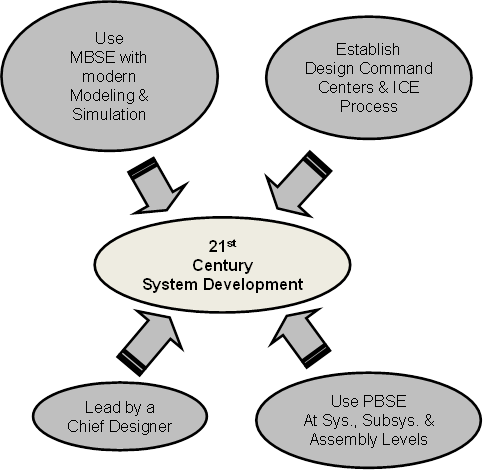
Figure 12-4 The methods described in this book can be integrated to provide a robust approach to system development that can achieve dramatic reductions in cost and design time.
Tuesday, October 18, 2011
12.2 Integrated Concurrent Engineering (ICE) for Small Teams
The ICE approach described in Section 12.1.1 and 12.1.2 applies to teams of 15 to several hundred people; assuming the large teams are organized into smaller IPTs of 10 to 25 people. The design command centers can be shared by many individual teams on a development project because each team uses the center for only a half day at a time and for only three to ten days a month typically. Some system developments can be accomplished with smaller teams of five to ten people. Whereas small teams can also use the same design command center and concept of operations as larger teams an alternative approach may be even more efficient.
Work spaces for most organizations use individual cubicles or cubicles shared by two or three people. Most of these work spaces are modular and can easily be reconfigured. For example suppose a project has six or seven workers each in his/her cubicle. Typically, workers are assigned cubicles without consideration of where others working on the same projects are located. Much of the communication takes place via emails or periodic meetings in a conference area. Figure 12-3 shows how a space of eight cubicles can be rearranged to colocate seven workers and a conference table. Collocating workers as shown in Figure 12-3 enables continuous face to face interactions to replace emails and periodic meetings in conference rooms. Research has shown that problems are solved much faster by groups communicating face to face compared to groups communicating via email. That is to be expected because the information latency in face to face communications is almost instantaneous whereas it is many seconds or even hours with email.
It increases productivity to have two workers with related skills close enough together that they can see each other’s computer screens and discuss what is on the screen without moving from their work positions. Examples include mechanical and thermal engineers or mechanical engineers and designers skilled in mechanical CAD tools that are supporting the engineers.
If the team leader is collocated with the rest of the team so that he/she can facilitate an ICE process then dramatic reductions in project cost and design time should be realized just as it is for larger teams using ICE. A caution is that team dynamics are more important for collocated teams than for teams in individual cubicles. Teams must be comprised of individuals who work well together or else productivity suffers. Workers who perform better as individual contributors are likely better left in their own cubicle. It is also advisable to provide training so that the workers understand why they are being asked to give up the privacy of individual cubicles.

Tuesday, October 11, 2011
12 Integrating Modern Methods for Faster Systems Engineering
12.0 Introduction
In chapter 2 it was explained that the best model for system development is the “craftsman” model that was widely used before systems became so complex that a single chief engineer could no longer understand a system in sufficient detail to control all aspects of design. System engineers, design engineers and other specialty engineers became necessary to handle the complexity of modern systems. Although this new approach has enabled the development of very complex modern systems it takes much longer to develop a system now than it used to take when a chief engineer and his/her team could develop a new system in a few months.
One objective of this book is to introduce new methods that enable the systems engineering work on system development to be accomplished faster and more accurately. This book has an emphasis on systems engineering fundamentals, as described in the DoD SEF and the NASA SE handbook, and readers will note that it takes time and discipline to follow these fundamental processes. Complex systems cannot be developed cost effectively by shortcutting the systems engineering fundamentals; what is necessary is faster and more accurate methods for executing these fundamentals. Accuracy is required because any errors in systems documentation results in costly “find and fix” efforts later in design or in integration and test. Several methodologies for ensuring accuracy have been discussed including using graphical models in place of text as much as possible, employing redundant tools for developing documentation, using modeling and simulation to support requirements analysis as well as design and checking work at the three levels of worker checking his/her work, peer reviews and design reviews.
In chapter 5 pattern based systems engineering was introduced, which when properly implemented, can dramatically reduce the time to produce much of the top level systems engineering documentation and at the same time increase the accuracy of requirements definition. Similarly using validated system performance models and simulations throughout the development cycle aids in reducing development time and increases the accuracy of requirements and design concepts and the robustness of systems.
The objective of this chapter is to describe methods for reducing information latency and then to show how integrating modern methods can achieve greatly reduced time for systems engineering work without sacrificing any process fundamentals critical to the accuracy of this work. Information latency is the time between when information is generated and the time it is available to others who are depending on the information for the next steps in their work. Information latency was increased with the evolution from the craftsman model for product development to models with systems engineers; this is the primary reason modern systems take so long in development. Reducing information latency to levels near what it was for the craftsman model is a necessary step in achieving faster system development cycles.
12.1 Integrated Concurrent Engineering
In the 1990s a method emerged for reducing information latency for system development teams. This method is similar to methods used previously when teams of workers were brought together in a common work area to collaborate to quickly accomplish some project. Many organizations in the aerospace and defense industry use special work areas to collocate the people writing and publishing proposals, which are often highly time constrained projects. The use of proposal preparation rooms with personal dedicated to working in these rooms results in highly productive teams for the limited times involved in typical proposal efforts. A major part of the increased productivity is due to the reduction in information latency achieved by having workers so close they can ask questions of one another and get immediate answers. If teams tried to maintain such intense work over long periods productivity would taper off due to workers being unable to maintain the long hours and intense work without burnout.
The methods that evolved in the 1990s achieve the reduction in information latency and the associated productivity gains of the colocated teams and permit teams to work effectively for long periods without burnout. These methods became possible by exploiting new technology as well as new work management methods.
The availability of inexpensive large screen display projectors, n to one video switches and inter/intra nets makes it cost effective to set up special work rooms where teams of 10 to 25 knowledge workers can gather with their laptops and software tools. These teams can simultaneously work and share the work results with the entire team on the large screen displays as fast as the results are available. Many organizations now use such facilities for teams to gather for intense work and information sharing periods of three to four hours two or three times weekly. These sessions must be well planned and workers must come prepared to work and share results in real time. Planning, documenting work and time consuming tasks are performed in between the sessions in the special work rooms. This approach is called by a number of names but Integrated Concurrent Engineering (ICE) is a common name. This approach is effective because it reduces information latency from minutes to seconds or hours to minutes.
ICE is proven to reduce cost and schedule of complex projects by factors of three to ten 12-1, 12-2. Neff & Presley 12-3 reported that the Jet Propulsion Laboratory initially achieved an average of over 80% reduction in project costs and significantly improved the quality and speed of work. With more experience a 92% reduction in design time and a 66% reduction in cost was reported. Designs produced using ICE are of higher quality because they examine each option in greater detail earlier in the design process by sharing thousands of design variables in real time. Approaches that are proven to reduce cost and schedule by factors of three to ten and increase quality at the same time should not be dismissed by organizations that wish to remain competitive.
The benefits of ICE are better understood by examining the work space and the work process in more detail. There is no single best work space design or work process; each organization tailors both to their views and their business processes. Examples presented here are guidelines for understanding ICE and not necessarily the best for any specific organization.
12.1.1 The ICE Design Command Center- A schematic diagram of a small ICE work area is shown in Figure 12-1. The room has large screen displays located where they are visible to everyone in the room. Several displays are used so that several different types of information can be displayed simultaneously. Each skill cluster has workers with common specialties and each worker has computer equipment and the design, modeling and simulation tools associated with his/her specialty. Alternatively each cluster can be an IPT responsible for a segment of the system design. Each of the computers is connected to one of the large screen displays via a video switch so that the results of analysis, modeling or simulation can be shared with everyone in the room on one of the large screen displays. The facilitator, typically the lead systems engineer for the systems engineering phase of development, is responsible for maintaining the design baseline visible to all at all times and to lead the team through a preplanned sequence of analysis tasks that lead to design decisions in real time.

12.1.2 The ICE Concept of Operations - Integrated Concurrent Engineering is a repeating series of planning sessions followed by team work sessions, followed by documentation and follow-up analysis in parallel with the planning for the next series of team work sessions. The times for each of the components of the ICE cycle are dependent on the type and complexity of the system being developed. Example times are given here to explain the concept of operations. Development teams are likely to find adopting this concept of operations to their systems development requires adjustments. A typical approach is illustrated in Figure 12-2 where a series of three plan/ meet/document sessions are shown and each of the meet or design sessions is comprised of three intense team sessions separated by a day or two. Individual design sessions may last from two to four hours.

The planning, indicated by A in Figure 12-2, is done by team leaders and might take a week to plan a series of three intense work sessions, indicated by B, over another week period. The series of work sessions is followed by perhaps two weeks of documenting work done in the design sessions and carrying out analyses that takes too much time to be done in design sessions. In the example shown in figure 12-2 nine intense design sessions are planned, executed and documented in a an eight week period. Note that since the design sessions are the only activities that require the ICE design command center such a center can support three or four ICE projects or separate IPTs of a large project concurrently.
12-1 The Integrated Concurrent Enterprise by David B. Stagney, MIT Department of Aeronautics and Astronautics, Sloan School of Management, August 13, 2003
12-2 Observation, Theory, and Simulation of Integrated Concurrent Engineering by John Chachere, John Kunz, and Raymond Levitt, Center For Integrated Facility Engineering, Working Paper #WP087, Stanford University, August 2004
12-3 Implementing a Collaborative Conceptual Design System
– The Human Element is the Most Powerful Part of the System by Jon Neff and Stephen P Presley, IEEE, 2000.
Tuesday, October 4, 2011
11.3 Creating an Executable Model
(I apologize but the formatting problems continue.)
Several companies have tools available that allow for modeling systems using UML (or SysML) diagrams. These companies include EmbeddedPlus Engineering11-7, Vitech and IBM© under their Rational© product suite. The tools support the modeling language semantics so the engineer can focus on creating the design of the system and not on the accuracy of the diagrams per the modeling language specifications.
Vitech supports the following UML diagram types in their CORE11-8 Software:
· Activity
· Sequence
· Class
· Package
· Use Case
IBM Rational supports the following UML diagram types in their Statemate11-9 product:
· Use Case
· Sequence
· State Machine
Using a standard development process, these tools are used from requirements down to executable software. Benefits from creating an executable model include verifying completeness and correctness of the system and bridging the gap between the systems engineering functional domain to the Object-Oriented Software Engineering domain. The models are not just done at the beginning of system definition, but evolve as the development process progresses until there is executable software. The SysML Forum, http://www.sysmlforum.com/, provides an overview of possible SysML tools that can be used for creating an executable model.
12.4 Benefits and Limitations of UML
Benefits 0f using UML when defining a system include:
· Standardized (by OMG Group), not proprietary
· Common language for communicating
· Explained and described in every aspect by vast amount of publications, resources, textbooks, etc.
· Can be customized and extended for specific application domain, software process, or implementation platform
· Uses object oriented design concepts
· Independent of specific programming language
SysML benefits include:
· Requirement modeling support provides the ability to assess the impact of changing requirements to a system’s architecture
· Precise language, including support for constraints and parametric analysis that allows models to be analyzed and simulated, greatly improving the value of system model compared to textual system descriptions
· Open standard
Whereas UML has many benefits, it also has limitations:
· Still no specification for modeling of user interfaces
· Poor for distributed systems – no way to formally specify serialization and object persistence
· Requires training/certification
· Specification is large and takes time to understand
· Can’t describe relationships between complex system composed of both hardware and software
12.5 Where to Find More Information on UML (SysML)
To learn more about SysML and the different diagrams, please see http://www.omgsysml.org/INCOSE-OMGSysML-Tutorial-Final-090901.pdf
There are many available resources on UML both in book form and on the internet. Beneficial books include:
1. Systems Engineering with SysML/UML: Modeling, Analysis, Design by Tim Weilkiens
2. Model-Based Development: Applications, by H. S. Lahman
3. Using UML: Software Engineering with Objects and Components, by Perdita Stevens
4. Software Modeling and Design: UML, Use Cases, Patterns, and Software Architectures, by Hassan Gomaa
5. UML for Real: Design of Embedded Real-Time Systems, by Luciano Lavagno, Grant Martin and Bran V. Selic
6. Model-Driven Development with Executable UML (Wrox Programmer to Programmer), by DraganMilicev
7. UML 2.0 in a Nutshell, by Dan Pilone and Neil Pitman
8. SysML for Systems Engineering (Professional Applications of Computing), by J. Holt and S. Perry
9. Writing Effective Use Cases, by Alistair Coburn
10. Software for Use: A Practical Guide to the Models and Methods of Usage-Centered Design , by Larry L. Constantine and Lucy A. D. Lockwood
11. Use Case Modeling , by Kurt Bittner and Ian Spence
12. Scenarios, Stories, Use Cases: Through the Systems Development Life-Cycle, by Ian Alexander, Neil Maiden
13. Use Case Driven Object Modeling With UML: Theory And Practice, by Doug Rosenberg, Matt Stephens
Beneficial web sites include:
6. OMG Systems Modeling Language Tutorial, http://www.uml-sysml.org/documentation/sysml-tutorial-incose-2.2mo
7. An Introduction to Systems Engineering with Use Cases, by Ian Alexander and Thomas Zink, http://easyweb.easynet.co.uk/~iany/consultancy/use_cases/use_cases.htm
8. Visual Paradigm, http://www.visual-paradigm.com/product/vpuml/provides/umlmodeling.jsp?src=google&kw=use%20cases&mt=p&net=s&plc=&gclid=CJSQzqzNkqgCFYi8KgodmmeJCw
9. SmartDraw, http://www.smartdraw.com/specials/ppc/softdesign.htm?id=10514&gclid=CNSquMTNkqgCFcW5KgodrHR2Dg
References
11-1 Model-based Systems Engineering (MBSE) Initiative, by Mark Sampson and Sanford Friedenthal, Presented at the Opening Plenary of the International Workshop, Phoenix, AZ, 29 January 2011; http://www.omgwiki.org/MBSE/lib/exe/fetch.php?media=mbse:mbse_iw_2011_intro-b.pdf
11-2 Foundational Concepts For Model Driven System Design by Loyd Baker, Paul Clemente, Bob Cohen, Larry Permenter, Byron Purves, and Pete Salmon, INCOSE Model Driven System Design Interest Group
11-3 The Unified Modeling Language User Guide, by Grady Booch, James Rumbaugh, and Ivar Jacobson, Addison-Wesley Professional; 2 edition, May 29, 2005
11-4 Unified Modeling Language Tutorial, http://atlas.kennesaw.edu/~dbraun/csis4650/A&D/UML_tutorial/activity.htm
11-5 Object-Oriented Development in an Industrial Environment, Ivar Jacobson, Proceedings of OOPSLA´87, SIGPLAN Notices, Vol. 22, No. 12, pages 183-191, 1987
11-6 Object-Oriented Software Engineering: A Use Case Driven Approach, by Ivar Jacobson, Magnus Christerson, Patrik Jonsson, and Gunnar Övergaard, Addison-Wesley, Wokingham, England, 1992.
Subscribe to:
Posts (Atom)